
Florida Projected Versus Actual Release
A projected date answers when a sentenced person may leave a given custody system under the facts now recorded. An actual date reports that custody did end. Florida Department of Corrections records call the public estimate Current Release Date. State law uses the term tentative release date for the date FDC calculates from the sentence, credited time, and gain-time. Both terms point to a working calculation. Neither is a promise of release at a fixed hour or proof that the person is now out.
The first distinction is sentence status. A person held before trial does not yet have a prison sentence from which FDC can calculate a projected endpoint. Bond, a court order, dismissal, a plea, or sentencing may change that county custody status. A sentenced state prisoner may have a calculated FDC date. Someone serving a county-jail sentence may instead have a date maintained by the county custodian, based on the judgment and local sentence administration. Those systems should not be blended.
Transfer is another key limit. Leaving a county jail for FDC, federal custody, immigration custody, another county, or another lawful placement is not the same as community release. In the same way, leaving an FDC institution may begin post-prison supervision. The record should be described with the agency's own status and date labels.
The public FDC active detail shows where the Current Release Date appears.
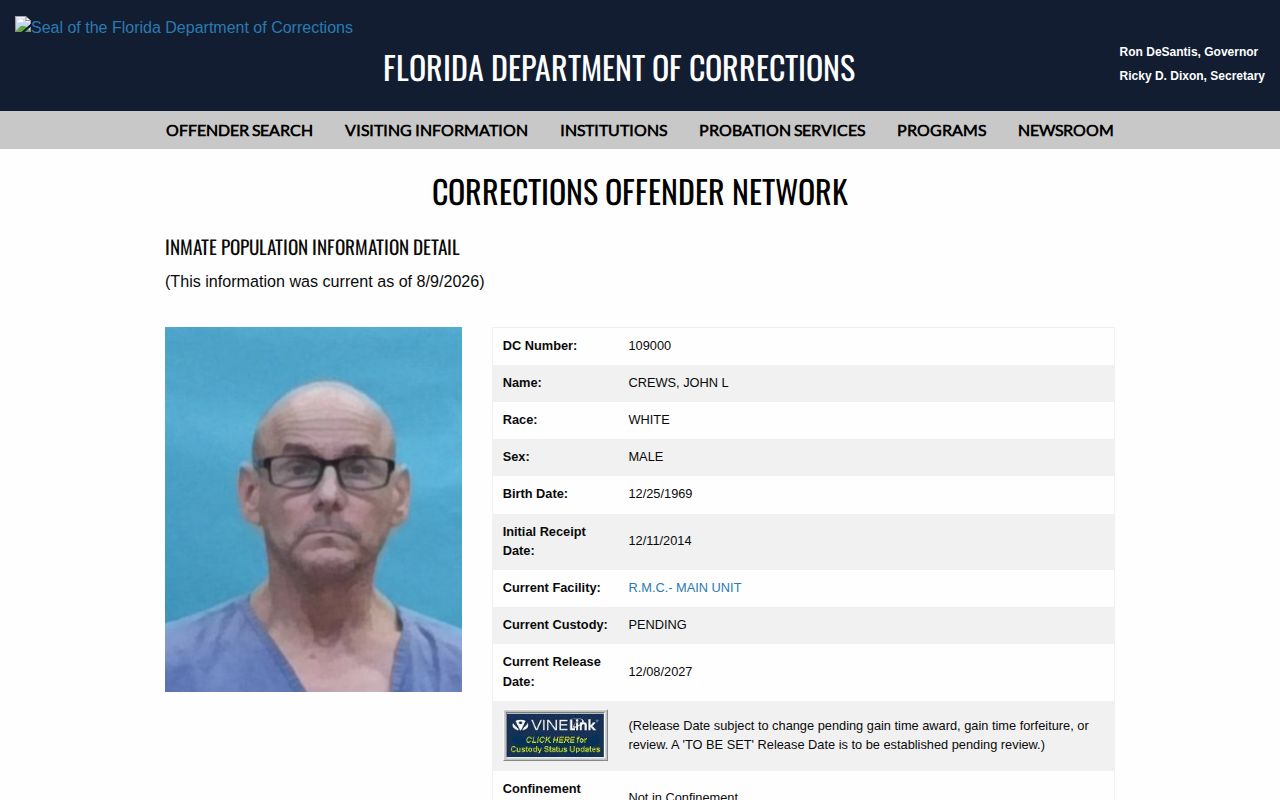
The displayed warning makes the correct reading plain: the date reflects FDC's current data and remains subject to change.
Find Florida Projected Release Dates
Start with the custodian, not with a broad name query. FDC handles state-prison sentences and state community supervision. County sheriffs or county corrections departments hold local jail records. The federal Bureau of Prisons handles federal terms, while immigration detention uses a separate federal system. Knowing that first prevents a county booking from being mistaken for a state-prison case.
The FDC Corrections Offender Network separates active prison, released, supervised, and absconder records.
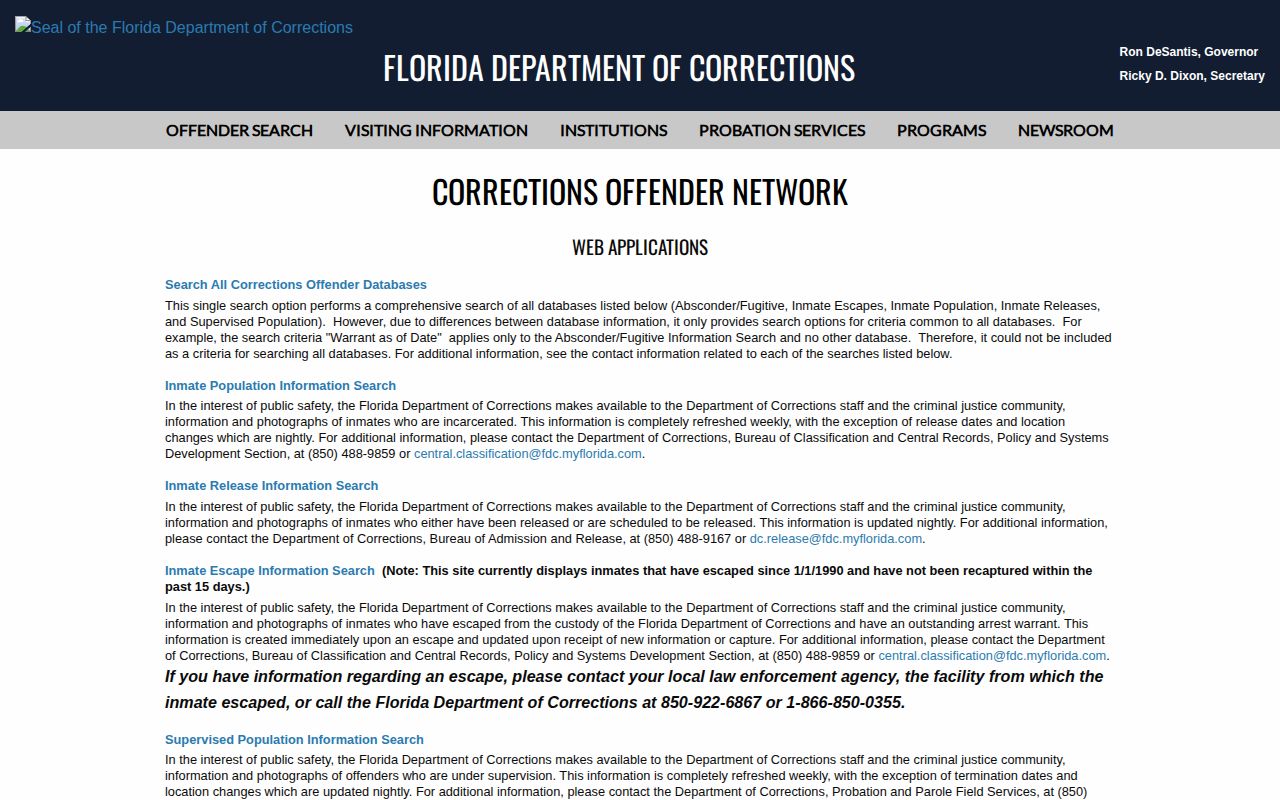
For a date that has not passed, the active inmate population branch is the relevant FDC starting point rather than the historical release branch.
- Confirm that FDC, rather than a county jail or another sovereign, has the sentenced person.
- Open the active Inmate Population Information Search and use the DC number when it is known. Otherwise, search by name and compare the public identifiers.
- Open the detail record. Read the Current Release Date exactly as shown and note FDC's warning that it can change.
- Compare the DC number, offense, sentence, and incarceration history so a same-name result is not treated as the right person.
- If the date is missing or conflicts with the court judgment, check the sentencing county's clerk record and request the needed sentence or incarceration record from FDC.
- After the date passes, move to the FDC release search and look for Release Date and Date Out-Custody. Then check supervision if the legal status still matters.
For county custody, use the Florida County Directory to reach the county source. Ask the county records custodian for the booking or sentence record and consult the sentencing clerk for the judgment, jail-credit award, amended order, or later case action. A live county roster mainly answers who remains housed now. Once a person leaves that roster, it may no longer show the event needed to prove release.
Note: A DC number is the best FDC match key because common names, aliases, and spelling differences can produce uncertain results.
Florida Release Date Terms
Florida's public and legal terms are close, but not interchangeable. Reading the label in context helps prevent a tentative date from being reported as a completed release. It also separates the end of one incarceration episode from the end of the full sentence or a later supervision term.
- Current Release Date
- The date shown on an active FDC detail as the department's present release calculation.
- Tentative release date
- The statutory term for the calculated date after sentence credit and lawful gain-time are applied.
- Maximum sentence expiration date
- The sentence endpoint before the tentative-date calculation is treated as a separate statutory measure.
- Release Date
- The headline date in FDC inmate release information, which can include a scheduled future entry as well as a past release.
- Date Out-Custody
- A date tied to a closed incarceration-history event in a released FDC detail.
FDC says its release database includes people who have been released and people scheduled for release. It also says that release information is updated nightly. A future Release Date in that search is therefore not the same as a past Date Out-Custody. Wait for the date, review the incarceration history, and check any supervision record before describing the event.
Florida Gain-Time Release Rules
Florida Statutes section 944.275 directs FDC to establish the tentative release date by reducing the sentence with jail credit, other authorized credit, and gain-time. Gain-time is sentence credit administered under the statute. It is not a separate court sentence, and it does not let a reader safely reconstruct a date from one simple formula.
For offenses committed on or after October 1, 1995, the statute authorizes up to 10 days of incentive gain-time per month and applies the 85-percent floor. Earlier offense-date bands use different rules. The statute also addresses specified meritorious and educational awards, as well as forfeiture tied to discipline. Offense date, statutory version, conduct, and the official sentence record all matter.
| Input | Florida record effect |
|---|---|
| Sentence imposed | Sets the court-ordered term from which FDC begins its calculation. |
| County jail credit | Credits eligible time served before sentence under section 921.161. |
| Incentive gain-time | May reduce time within the limits and offense-date rules of section 944.275. |
| Other authorized credit | Changes the tentative date only when law and the official record support it. |
| Forfeiture or restoration | May move the calculation after a disciplinary or authorized later action. |
The jail-credit statute connects the trial-court judgment to FDC's work. It governs credit for time spent in county jail before sentence. If the credit on a court record and the FDC date appear inconsistent, the sound path is to compare the judgment and FDC sentence data, then seek clarification from the record-owning agency. Guessing from arrest and sentencing dates can omit legal inputs.
Note: Gain-time can affect the calculation, but the official FDC detail remains the best public source for the current date.
Florida's Projected Release Floor
Florida's modern truth-in-sentencing rule sets a floor, not a target date. For the covered offenses, section 944.275 limits incentive gain-time so the prisoner may not serve less than 85 percent of the sentence imposed. The Florida Criminal Punishment Code states the same broad service rule within its sentencing principles.
A quick calculation of 85 percent cannot prove an individual's projected release. Jail credit may be part of the official calculation. Sentence structure, offense date, discipline, legal holds, and later court action may also matter. Some sentences fall within older statutory bands. Others include terms or events that are not visible from a short result-list row. The statute provides the framework, while the person-specific FDC record supplies the agency's current calculation.
Question: Does the 85-percent rule guarantee release once that point is reached? No. It limits how gain-time may reduce a covered sentence. It does not override a valid detainer, a new court order, a different sentence, or another lawful basis for custody.
Why Florida Release Dates Change
A projected date can move when one of its source facts changes. Some changes affect the sentence computation itself. Others affect whether the person leaves for the community or moves to another custodian. A date change should be traced to the official record, not explained by assumption.
| Change | What to verify |
|---|---|
| Sentence or amended order | Check the sentencing county's clerk docket and the FDC sentence entry. |
| Jail-credit correction | Compare the judgment or credit order with the FDC calculation. |
| Gain-time forfeiture or restoration | Use FDC's current detail and request the relevant record if the basis is unclear. |
| Detainer or hold | Identify the next agency; transfer may follow even when FDC custody ends. |
| Parole or conditional-release action | Verify the FCOR action and then confirm the later custody event with FDC. |
| Data correction or refresh | Recheck the detail after the nightly date update and preserve the access date. |
Florida Commission on Offender Review activity must be read with care. A hearing date, agenda listing, or presumptive parole release date does not show that the person left prison. FCOR's final action controls the commission decision, and the later FDC release record controls whether state-prison custody ended. Conditional release also may begin a supervision term rather than end every legal obligation.
If another sovereign takes custody, describe the event as a transfer unless that agency later reports release. BOP, ICE, another state, or a county can become the next source. The FDC out-custody date remains useful evidence of the Florida prison event, but it does not speak for the next custodian.
Request Florida Release Date Records
A focused records request can resolve a missing field or a conflict between the court judgment and the public FDC detail. Florida's public-record framework rests on article I, section 24 of the state constitution and chapter 119. FDC directs requests through its public-records page and online Public Records Center. The request should name the person, give the DC number when known, identify the approximate custody period, and state which existing record is sought.
Useful descriptions include sentence data, incarceration history, release documentation, or a specified disciplinary record tied to a gain-time question. Ask for electronic delivery and a cost estimate when the request may be broad. FDC notes that chapter 119 does not require the agency to create a new record, do research, answer questions about records, or convert material into a form it does not keep. A narrow request is thus more likely to reach the source document behind the displayed date.
Florida's Two Release Date Labels
Florida uses a notable pair of terms for the same stage of sentence administration. The public detail presents Current Release Date, while section 944.275 calls FDC's calculated endpoint the tentative release date. The difference is useful, not merely technical. "Current" tells the reader which estimate FDC displays now. "Tentative" states why that value should not be treated as fixed.
The public record also warns that the date can change. That warning fits the statute's method: sentence length, jail or other credit, and gain-time feed the calculation, and later lawful changes can alter an input. The proper citation pairs the displayed FDC date with its access date. When the date passes, the claim should shift from projection to proof only after the release record shows the completed event.
The FDC Inmate Release Information Search is the later checkpoint for that completed event.
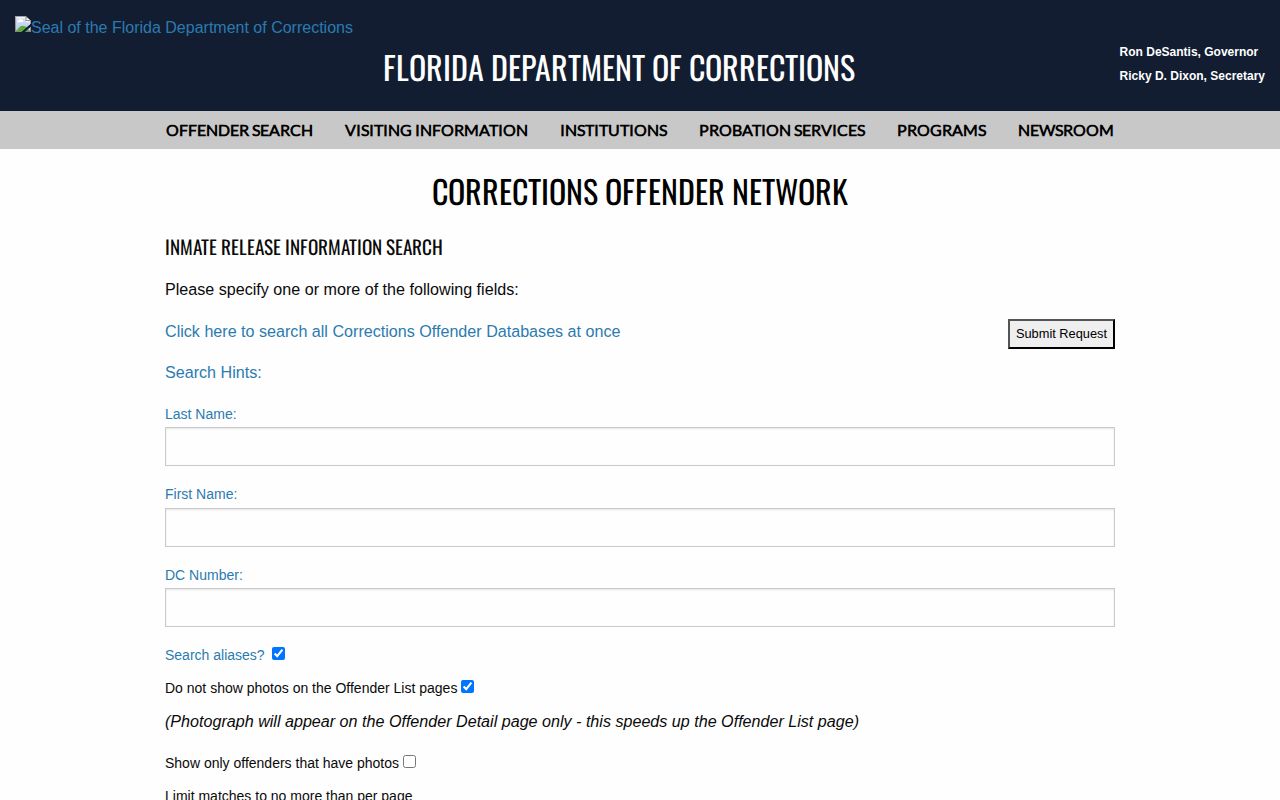
Its separate form helps keep a projected active-prison date apart from historical release and out-of-custody evidence.
Confirm Florida Inmate Release
Confirmation uses a short chain. First, open the FDC release detail and look for a past Release Date plus the relevant Date Out-Custody in incarceration history. Next, check the supervised population search. A closed prison episode and an active supervision record can both be accurate. If no clear public record appears, request release documentation, sentence data, or incarceration history through FDC's Public Records Center.
The FDC Supervised Population Search answers the next-status question after physical custody ends.
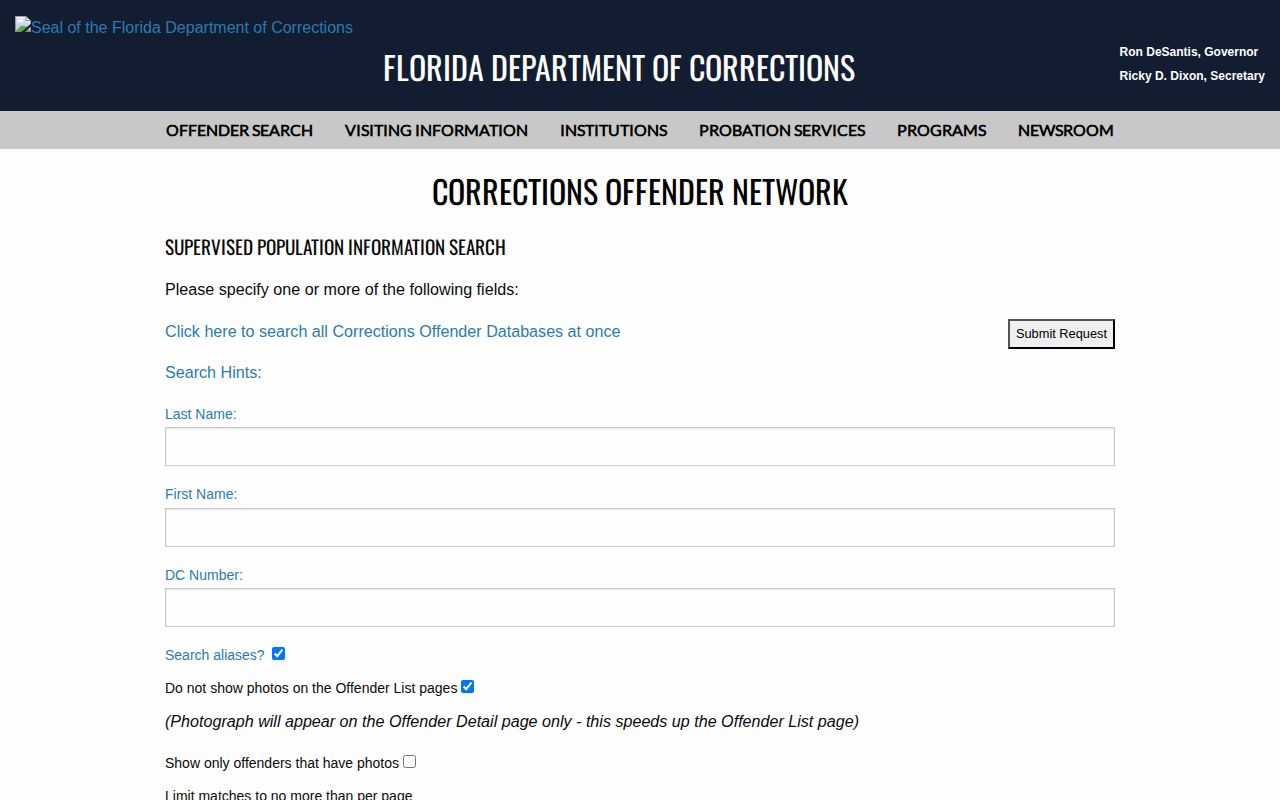
A supervision hit may identify probation, parole, conditional release, community control, or another state-supervised status without undoing the prior release date.
VINELink can add a custody-change alert, but an alert is not the certified agency record. The Florida VINELink inmate search explains person matching and event registration. For a court-based check, use the sentencing county's clerk for the judgment, amended order, or case disposition. Florida's statewide ACIS covers appellate courts, not every circuit and county criminal docket.
Note: Record the source, exact field label, and access date so a later change can be explained without overstating the earlier result.